
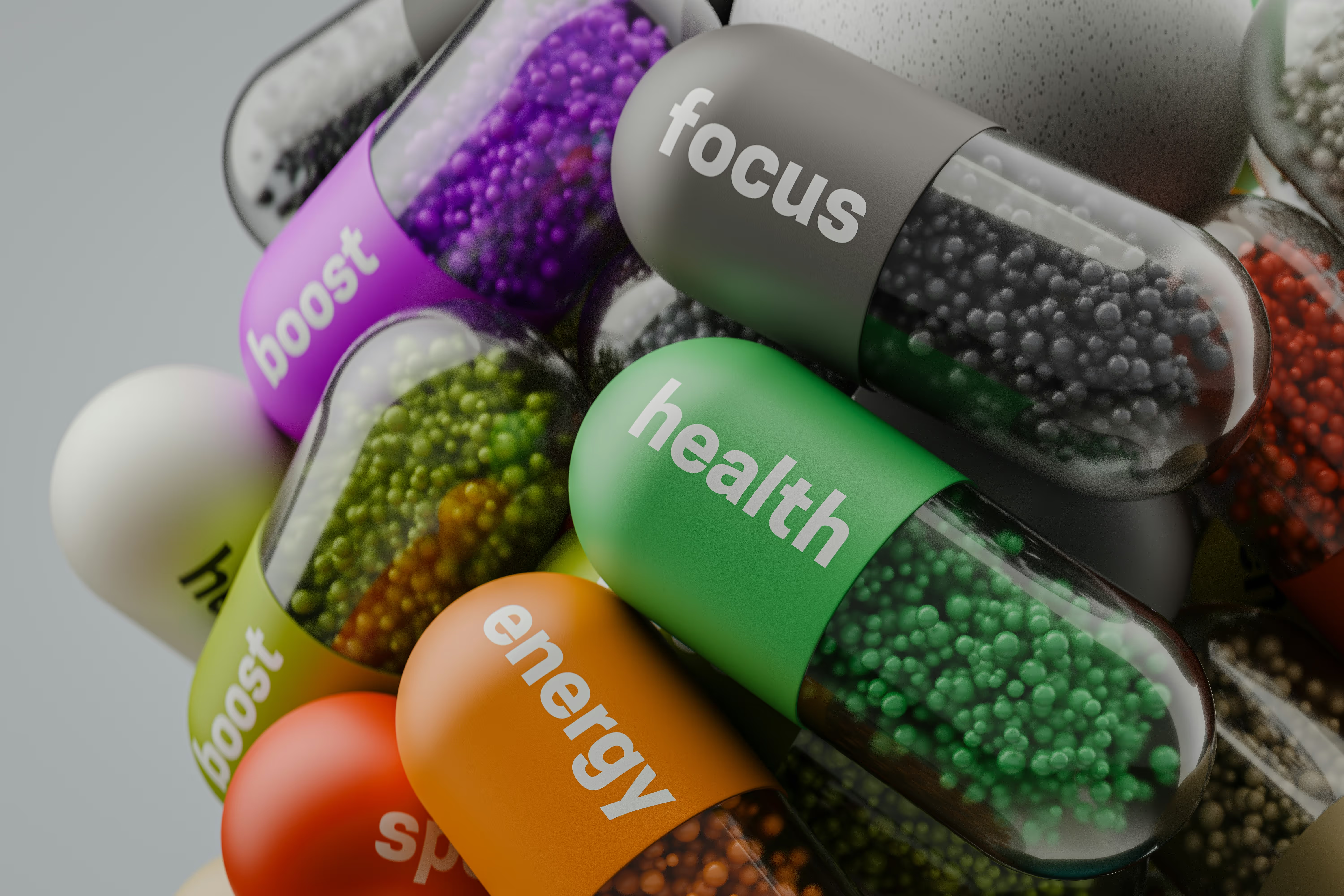
Key Supplement Dos and Don’ts, from Registered Dietitians
The supplement aisle is chaotic. Registered dietitians break down what to take, what to skip, and how to build a smarter, safer routine.
To say you have lots of options when supplement shopping might just be the understatement of the year. The supplement market is about as crowded as a rush-hour traffic jam, and to add to the headache, supplement brands aren’t required to earn FDA approval (or, therefore, undergo FDA-regulated safety testing) before hitting shelves.
So where does that leave you in your pursuit of better health, without the time to complete an FBI-level background check on every product in your medicine cabinet? To find out the best way to achieve a BS-free supplement routine, we asked two dietitians for their biggest supplement dos and don’ts, along with insights on multivitamins, probiotics, ashwagandha, and more.
The Experts
- Kayla Kamen, MS, RD, dietitian at Drink Wholesome
- Amy Goblirsch, RD, owner and dietitian at The Running Dietitian
The Supplement Dos
- Do prioritize a balanced diet.
- “Do your research on brands, ensur[ing] the ingredients are real food-based, without any synthetic alternatives. Check for a full ingredient list, specific quantities (mg/mcg), and the percentage of active compounds, especially in herbal products. Look for ingredients like wheat, corn, or gelatin if you have food sensitivities,” says Kamen.
- Do focus on quality. “Supplements are poorly regulated, choosing third-party tested products such as NSF Certified, USP Verified, or Informed Sport is important for safety and quality,” says Goblirsch.
- Do start your supplement journey at the doctor’s office. “Before taking any supplements, I always recommend checking with your doctor to get a full blood panel. That way, you can determine any deficiencies, abnormalities, and avoid any drug-nutrient interactions…[as] some prescription medications and treatments require you to avoid certain nutrients,” says Kamen.
- Do match supplements to a real need. “They make sense when someone has a confirmed deficiency, is in a specific life stage like pregnancy, menopause, or older age, follows a restrictive diet such as vegan or low-fish, or has high training or stress demands,” says Goblirsch. “Instead of asking, what more should I take, ask what am I missing.”
- Do pair supplements with healthy habits. “They work best when incorporated with the basics like consistent meals, good sleep, regular exercise, and stress management,” says Goblirsch.
The Supplements Don’ts
- “Don’t fall for products promising miracle cures or brands that use personal testimonials as proof,” says Kamen.
- Don’t expect supplements to cure underlying health problems. “No supplement can fix the problem if those foundations are shaky,” says Goblirsch.
- “Don’t use supplements as replacements for prescribed drugs, treatment plans, or real food,” says Kamen.
- Don’t assume you need a complicated supplement routine to achieve optimal health. “Most people don’t need a cabinet full of supplements to improve their health and longevity. Supplements should be, as the name suggests, supplemental,” says Goblirsch.
- Don’t “take excessive amounts or multiple products with the same ingredients; while rare, toxicity is possible,” says Kamen.
Should Everyone Take a Multivitamin?
“It depends! The term ‘average’ is ever evolving…it’s hard to say what the general population needs,” says Kamen. “The facts are, people need vitamins and minerals to survive, and if they’re not eating a varied, balanced diet full of fruits, vegetables, and protein, then a multivitamin is the next best thing.”
Goblirsch agrees: “It is impossible to meet your Recommended Dietary Allowance (RDA) for every single nutrient through food alone. A multivitamin can be helpful for filling small gaps, especially when intake is inconsistent or certain foods are limited,” she says.
Kamen also highlights the need to consider potential deficiencies: “Some widely accepted medications, like birth control pills, can deplete certain nutrients like B vitamins (B6, folate, B12), C, E, magnesium, zinc, and selenium, which would indicate a need for supplementation or increased intake of food sources.”
But this doesn’t mean everyone should take a multivitamin, especially if you aim to eat all of your nutrients through food: “For someone of average weight, health, and age who leads an active lifestyle and does not take any medication, a multivitamin is not essential, especially if they are eating a varied, balanced diet,” says Kamen.
Who Should Consider a Multivitamin?
Kamen notes that these groups may benefit from a multivitamin to fill in gaps and prevent deficiencies:
- Older adults: “[In older age], appetite tends to decrease, along with bone density and strength. A calcium supplement or multivitamin can help to support bone health and fill in gaps where food intake falls short,” says Kamen.
- Pregnant or breastfeeding mothers: ‘Vitamin and mineral needs increase [in this stage]. Folate, for example, is essential for fetal growth and development. While certainly possible to obtain through diet alone, a prenatal vitamin can help to ensure that all mom's and baby’s needs are being met. The same goes for breastfeeding, with metabolism in hyperdrive, mom’s needs can often get forgotten.”
- Growing children: “Their nutrient needs are ever evolving, and it can be a huge challenge to meet them through food alone. Especially for picky eaters, a multivitamin is a great option to help promote appropriate growth along the curve.”
- People following a plant-based diet: “While plant-based diets are rich in many nutrients, B vitamins and vitamin A tend to be sourced from animal sources of protein.”
- “Individuals on GLP-1s are seeing a huge decrease in overall food intake, which puts them at risk for micronutrient deficiencies and malnutrition,” adds Kamen.
Stridekick Pick: Mary Ruth’s Multivitamins
If, after chatting with your doctor, you decide that a multivitamin is right for you, you can use your HSA/FSA funds to purchase one of Mary Ruth’s multivitamins from our Shop. Mary Ruth’s is a Certified B Corporation, and all of its supplements are Clean Label Project Verified, meaning they’re third-party tested for over 200 toxins and contaminants, and verified for product label accuracy.
Mary Ruth’s multivitamins come in liquid and gummy formulations with extra support for your hair or skin. Choose between:
- Mary Ruth’s Liquid Morning Multivitamin
- Mary Ruth’s Multivitamin + Hair Growth Gummies
- Mary Ruth’s Liquid Morning Multivitamin + Hair Growth
- Mary Ruth’s Liquid Nighttime Multimineral + Skin Renew
The Best Supplements to Support Your Workouts
Whether you’re struggling with sluggishness, want to up your exercise intensity, or just need a little boost, Goblirsch notes that these supplements can support your workouts:
- “Protein supports muscle repair and recovery. If you struggle to meet your needs through food alone, a protein powder is simply a convenient way to fill the gap,” says Goblirsch. Kamen also offered a few protein-specific dos and don’ts:
- Look for brands that are third-party tested and offer these results to their customers.
- Prioritize real food protein sources, and seek out brands that omit emulsifiers, additives, and artificial sweeteners. If you see concentrates or isolates, know that means the supplement has been ultra-processed.
- Don’t fall for wild flavors and extreme protein claims (like 50 grams per serving). The sweet spot for protein content is between 15 and 25 grams per serving.
- Stridekick pick: Swolverine's Plant Protein, a clean, third-party tested plant-based option with no proprietary blends.
- “Creatine is one of the most researched performance supplements available. It helps improve strength, power, and high-intensity performance,” says Goblirsch.
- Stridekick pick: Naked Creatine, a single-ingredient supplement containing pure creatine monohydrate. Nothing else.
- Also worth a look: Swolverine's Kre-Alkalyn, a pH-buffered form of creatine built to resist breaking down in liquid — no loading phase, no grainy mixability issues, just one scoop a day.
- “Caffeine can improve workout performance by increasing alertness, delay time to fatigue, and perceived effort, which often leads to better training,” says Goblirsch.
- Stridekick pick: Ketone-IQ’s Caffeine Shot, blending 10g of exogenous ketones with 100mg of natural caffeine from green tea
- “Electrolytes can be helpful for people who sweat heavily or train for long durations, as they support hydration and muscle function,” says Goblirsch.
- Stridekick pick: Lido’s Hydrating Electrolytes, made with natural fruit extracts in a certified vegan, non-GMO, zero-sugar formula
Supplement Fact vs. Fiction: Vitamin D, Probiotics, and Ashwagandha
We gathered our experts’ thoughts on a few of today’s most widely discussed supplements, vitamin D, probiotics, and ashwagandha, to help you better understand your needs.
Vitamin D
In winter, when the end of daylight saving time robs us of precious sunny evenings, you may wonder if you need a vitamin D supplement to make up for those lost rays and ward off seasonal mood shifts. “The human body synthesizes vitamin D, similar to how plants create energy (photosynthesis). When sunlight (specifically UVB rays) hits your skin, a cholesterol-like molecule (called 7-dehydrocholesterol) gets converted into vitamin D3. It then travels to the liver and kidneys for activation into its active hormonal form, calcitriol, which is essential for calcium absorption and bone health,” says Kamen.
“Vitamin D helps produce serotonin, a key mood-regulating neurotransmitter, so low [vitamin D] levels can disrupt mood,” says Kamen. Goblirsch adds: “Low vitamin D levels are linked with higher rates of depressive symptoms, including seasonal depression.”
That said, vitamin D supplementation isn’t for everyone. “While rare, vitamin D toxicity can occur with high doses over time and can lead to a buildup of calcium in the blood. Before starting vitamin D supplementation, I would recommend getting a blood workup to determine your current levels of vitamin D and calcium before initiating supplementation,” says Kamen.
With that in mind, Goblirsch generally recommends vitamin D supplements for these groups:
- “Individuals who get little sun exposure, which is common in winter months and northern climates.
- Older adults often benefit because the skin becomes less efficient at making vitamin D with age.
- People who avoid vitamin D–rich foods such as fatty fish, fortified dairy, or fortified plant milks may also be at higher risk of low levels.
- Anyone with a confirmed low vitamin D level on blood work should supplement under medical guidance,” says Goblirsch.
Prebiotics and Probiotics
“Gut health” has been one of the wellness industry’s biggest buzzwords over the last several years, bringing pre- and probiotics into the limelight. “Probiotics refer to the bacteria themselves that help to promote gut health. Prebiotics are the food for the probiotics,” says Kamen.
“The gut microbiome is a network of bacteria that works very hard to break down food, support immune function, and regulate digestion. When it is disrupted, you may notice many other body functions aren’t working correctly. Pre/probiotic supplements can be a great addition to your routine to help get back on track. But you don’t need to spend hundreds of dollars to achieve good gut health,” says Kamen.
“Probiotics and prebiotics can be helpful for people with frequent digestive issues (such as bloating, irregular bowel movements, or during and after a course of antibiotics) to restore the microbiome. For many people, fiber-rich foods can provide similar benefits,” says Goblirsch.
Kamen agrees: “If you have a specific gut issue or are recovering from antibiotics, supplements might help, but focus on fiber-rich foods first. Always talk to a healthcare provider before starting.”
If you want to support your gut health without supplements, consider these food sources, suggested by Kamen:
- Probiotics: Fermented foods like yogurt, kefir, kimchi, sauerkraut, miso, tempeh, kombucha, and certain cheeses
- Prebiotics: Fiber-rich foods, like onions, garlic, leeks, asparagus, chicory root, and Jerusalem artichokes, plus oats, barley, apples, bananas, legumes, and whole grains
If you’re shopping for a probiotic supplement (that will actually make it to your gut), Kamen recommends keeping these tips in mind:
- “Look for delayed-release capsules or brands that guarantee viability through the digestive tract.
- Probiotic dosage is expressed in CFU, which stands for colony-forming units. The International Scientific Association of Probiotics and Prebiotics (ISAPP) considers a total daily dose of one billion CFU to be the minimum effective amount. A daily dose of 10 to 20 billion CFU is advisable for individuals seeking everyday immune and digestive support. This number may vary greatly depending on your needs.
- Different strains of bacteria are associated with different outcomes. Do your research on which strains are best for your body. The most researched species of probiotics are Lactobacillus and Bifidobacterium,” says Kamen.
Stridekick Picks: Prebiotics and Probiotics
- Seed’s DS-01 Daily Synbiotic contains 24 clinically-studied probiotic strains delivering 53.6 billion AFUs (active fluorescent units, which are considered more accurate than CFUs), and a prebiotic outer capsule.
- Taylor Dukes Wellness’ Probiotic contains seven effective probiotic strains in a formula that’s free of dairy, egg, peanut, soy, wheat, gluten, corn, tree nuts, and artificial colors and flavors.
- Promix Debloat is a prebiotic and probiotic supplement for bloating, cramping, and digestive discomfort, featuring five billion active probiotics from three unique strains (and no gluten, soy, GMOs, artificial sweeteners, or stevia).
Ashwagandha
Originating from a shrub, with a rich history in Ayurveda, ashwagandha has become decidedly mainstream over the last few years. It’s an adaptogen, meaning it helps your body adapt to stress. But is it for you?
“Ashwagandha can be helpful for some people. Research suggests it may modestly reduce perceived stress and cortisol levels, which can indirectly support sleep and overall well-being. However, the effects are generally mild and work best alongside good sleep, nutrition, and stress-management habits, not in place of them,” says Goblirsch.
“It’s also not for everyone. Ashwagandha can interact with certain medications and may not be appropriate for people with thyroid conditions, autoimmune diseases, or during pregnancy,” Goblirsch adds.
“As with anything, talk with a healthcare provider before initiating supplements like ashwagandha, and opt for brands that have been third-party tested…have clean extraction methods, [and have] clear labeling…Opt for capsules or powders with clinically studied doses, generally 300 to 600mg,” says Kamen.
“If you do decide to start taking ashwagandha, as with any herbal supplement, start with a minimal amount to assess tolerance and monitor for potential side effects,” Kamen adds.
Stridekick Picks: Ashwagandha
These supplement blends from our Shop feature ashwagandha, along with other herbal powerhouses:
- Focus & Energy from BrainMD, a caffeine-free blend of decaf green tea, Sensoril ashwagandha, rhodiola rosea, Panax ginseng, and choline
- MUD/WTR Rest, a caffeine-free drink blend of rooibos tea, turmeric, and adaptogens including ashwagandha and reishi mushroom
- I Sleep Soundly from Banyan Botanicals, a blend of 11 calming botanicals including ashwagandha, valerian root, passionflower, chamomile, and more
The bottom line? If you’re intrigued by supplements, schedule an appointment with your doctor; they have a complete picture of your health and can make safe recommendations. And no matter what the influencers tell you, you don’t need a multi-step supplement regimen to be healthy—a thoughtful, doctor-recommended routine will beat the trends every time.