
.jpg)
Experts Break Down the Longevity Training Trend
What longevity training actually means, according to the people who study it.
This post contains affiliate links. Stridekick may earn a commission on purchases.
To state the obvious, we’re not going to live forever. *Sigh*. But let’s skip that existential crisis and focus on something more productive: protecting our longevity. Longevity is just the term for living a long, healthy life, and it hinges on pretty much every aspect of your well-being, including diet, sleep, stress, and, of course, exercise!
Recently, longevity training has emerged as a major trend in the fitness world. Exercise that aims to lengthen your lifespan, and your quality of life in older age, is a good thing. But how can you approach it as effectively (and realistically) as possible? We asked 3 fitness pros to find out.
The Experts
- Jamie Bovay, DPT, MTC, CSCS, physical therapist, author, and founder of KinetikChain
- Jacob Siwicki, NCSF and AFAA-certified coach, founder and head coach of Siwicki Fitness
- Antonietta Vicario, Chief Training Officer at PVOLVE, certified yoga, Pilates, and barre instructor
What’s the Goal of Longevity Training?
Longevity training is just what it sounds like: exercise that helps you age well.
“Traditional workout culture focuses on short-term metrics: calories burned during a single class, the weight on the bar, or pushing to total exhaustion. Longevity training flips that perspective entirely. It views the human body as a long-term engineering project built to operate without structural failure for decades to come so you can live the life you want to live when you are 90+,” says Dr. Bovay.
“Instead of asking, ‘How hard can I push today?’ longevity training asks, ‘What physical capability do I need at age 80, 90, and beyond to ski, travel, and play with my grandkids, and what baseline metrics must I build today to guarantee I get there?’ It shifts the focus from today to tomorrow without sacrificing the benefits of today's training,” Dr. Bovay notes.
Siwicki adds that longevity training doesn’t have to stray far (or at all) from your existing exercise routine: “I think longevity training is a new name for something good trainers should already be doing. You’re training so that your body can keep doing the things you want it to do outside of the workout.”
How to Prioritize Longevity in Your Workouts
There’s no single workout for longevity; it can look very different for different people. And that’s a good thing, because it means you can find a routine that aligns with your schedule, preferences, and goals.
To help you home in on that routine, we gathered our pros’ best insights on future-minded exercise.
Focus on Zone 2 Cardio, Mobility, and Muscle Mass
To work out for longevity, Dr. Bovay suggests concentrating on these physiological markers:
- Cardiovascular reserve (VO2 Max): “VO2 Max is one of the strongest statistical predictors of all-cause mortality and functional independence. Effective longevity training prioritizes low-intensity Zone 2 work to build cellular energy, paired with training that prioritizes short, high-intensity intervals to preserve peak oxygen capacity.”
What’s “Zone 2”, you ask? “Zone 2 is low-intensity cardio where your heart rate stays at roughly 60% to 70% of its maximum—a pace where you can comfortably breathe through your nose and hold a conversation, but couldn't sing a song,” says Dr. Bovay.
Brisk walking is one of the simplest options to reach Zone 2. And for a deep-dive into this topic, check out our blog article on heart rate training zones.
- Structural stability and joint clearance: “High-intensity workouts on bodies that are not ready for the stress can accelerate cartilage wear and cause chronic breakdowns. Longevity work focuses on rotational mobility, motor control, and joint tissue tolerance so your knees, hips, and back don't wear out by mid-life.”
- Sarcopenia defense (functional muscle): “Adults lose roughly 3% to 8% of muscle mass per decade after age 30 if left unaddressed. Longevity strength training targets power production, grip strength, and eccentric muscle control—the exact physical qualities required to maintain your muscle mass, prevent falls, and keep you moving independently,” adds Dr. Bovay.
Start Early and Focus on Form
No one wants to think about older age in early adulthood. But thinking about longevity now (and exercising accordingly) could make the transition into your golden years a whole lot easier.
“I love recommending that young individuals start incorporating strength training early on, as the muscle and bone you build in your youth sets the stage to age well later down the road. I recommend that people in their 60’s and 70’s maintain a strength and cardiovascular routine to keep them moving. Of course, some individuals need to adjust based on movement restrictions but ultimately, one maintains this routine throughout their various life stages,” says Vicario.
But no matter what you do, put form at the forefront: “Understanding proper biomechanics and correct form is the first step to building movement longevity, then training load follows,” says Vicario.
Along the same vein, Siwicki emphasizes the need to start gradually to prevent injuries that could totally derail your workout routine: “The biggest mistake is doing too much too soon. Choose exercises you can perform with control. Leave some energy in the tank. And build gradually. Longevity training is not about crushing one workout. It’s about creating a routine you can continue.”
Try a Functional Approach
There’s crossover between longevity training and another trendy fitness concept: functional strength training.
“Most people don’t care about being great at squats just so they can be great at squats. They want to pick something up off the floor. They want to carry groceries. They want to get out of a chair without using their hands. They want to travel, play with their kids or grandchildren, and go up the stairs without thinking about it,” says Siwicki. “That’s why I use squats, lunges, pushes, pulls, carries, balance work, and mobility. If somebody can do a squat, they should do a squat. If they can’t do one yet, they can sit down on a chair and stand back up. It’s still a squat.”
Odds are, you’re already doing some (or all) of these exercises in your strength training routine. And that means you’re already longevity training! “I don’t think people need a separate longevity workout. They need to strength train consistently, keep moving, and keep adjusting the exercises as their ability changes,” says Siwicki.
“The point of longevity training is not to prepare to be old. The point is to keep as many options as possible for as long as possible,” he adds.
Use Formal Workouts to Target Specific Goals
While everyday activities can support strength and mobility, to truly support longevity, formal workouts are key.
“I love the compounding nature of everyday habits like walking and taking the stairs, but it doesn’t replace the need for formal, structured workouts. We need to address the key physiological shifts that occur during midlife and beyond,” says Vicario.
Instead of viewing this as a chore, consider it an opportunity to target individual health concerns, like perimenopause and menopause: “As estrogen declines, women experience changes in muscle mass, bone density, and in how the body responds to stress, inflammation, and recovery. Additionally, the loss of estrogen affects insulin sensitivity, cognitive health, and mood. Movement is one of the most powerful tools to help combat these symptoms!” says Vicario.
“Weight training helps to offset muscle loss, boosts metabolic health, improves insulin sensitivity, fuels our energy, and supports our musculoskeletal health. Cardiovascular activity helps us keep our bones, heart, and brain healthy. While things like walking or taking the stairs are helpful, they won’t build muscle, and we need about 3 to 4-times a ground reaction force for an osteogenic response,” Vicario adds. “Opting for higher-intensity cardio is the gold standard when it comes to cardio for longevity.”
Adjust Based on Age
Building on the previous point: your longevity training can shift in different decades of life to meet changing needs. Here’s a quick overview from Dr. Bovay:
- In your 30s: “Your primary goal is building and storing physical capacity. Maximize your VO2 Max, build peak bone density, and heavy-load major muscle groups.”
- In your 50s: “Decades of sitting and muscle and joint imbalances start to catch up here. Shift from purely heavy lifting to addressing joint mechanics, strength deficits, and maintaining muscle velocity. You must keep your VO2 max and strength high while fixing movement imbalances so you can continue to move quickly and efficiently.”
- In your 70s: “The focus narrows to power preservation, single-leg balance, and joint clearance. Balance, power, and speed movements start to decrease faster than strength movements. You need to train fast-twitch muscle response with quick movements and single-leg activities in order to catch yourself if you trip, plus the strength to get out of deep chairs without using your hands,” says Dr. Bovay.
Sample Exercises to Get You Started
If you’re just getting started with longevity-focused exercise, take a look at these sample routines from our pros. You can use them as a template and adjust along the way to build a workout that suits your needs.
- Brisk walks + bodyweight strength training: “Start with 5 to ten minutes of walking most days. Once that feels manageable, add a short strength routine a couple of times per week using a chair, wall, resistance band, or light weights. A beginner session could include sitting down and standing up from a chair, wall pushups, supported rows, and marching in place,” says Siwicki.
- “Perform each movement slowly and stop before your form breaks down. If you have health concerns or unusual symptoms, obviously speak with your medical provider before increasing your activity. But most of these exercises are very doable and are just reps of what most people do in everyday movements,” Siwicki adds.
- Weight training + sprint intervals: “Focus on progressive weight training 3 times per week, strategically bringing all major muscle groups to failure to build and maintain muscle. They should augment these strength training sessions with sprint intervals twice a week,” says Vicario.
- “SIT (sprinting interval training) style training alternates between 30-second all-out sprints/plyometrics followed by 2.5 to 3 minutes of complete rest. Aim for 4 to 5 sets to reap the benefits of jump training for bone density, along with the cardiovascular and cognitive strengthening this type of training provides,” Vicario adds.
Parting Tips from Our Pros
Before adding longevity training to your workout lineup, consider these last few tips from our experts:
- Value consistency over intensity: “Your workout does not need to be long to matter. It needs to be repeatable enough to become part of your life…If you’re more advanced, just add weight to what you already do in life. A lot of times it can feel scary to start. But when you break it down and look at it, it’s like ‘wow! I already do most of this!’” says Siwicki.
- Don’t fall for pricey gimmicks: “You don't need a $10,000 home cold plunge or an expensive gym membership to build a durable body. The truth is that the expensive ‘hacks’ for your biology only make up about 20% of how you can boost your longevity. The other 80% are free,” says Dr. Bovay.
- Find your people: “My last tip would be around finding a community that inspires you to show up! My goal as a trainer is to create an environment where people feel supported, informed, and part of a larger community,” says Vicario. Exercise classes, run groups, and even special events, like the Livelong Women’s Health Summit where Vicario is teaching, can help provide this community.
Stridekick Picks: Workout Tools for Your Longevity Routine
Looking to invest in gear that brings your longevity workout to the next level? We hand-picked these goodies from the Stridekick Shop for your next wellness haul:
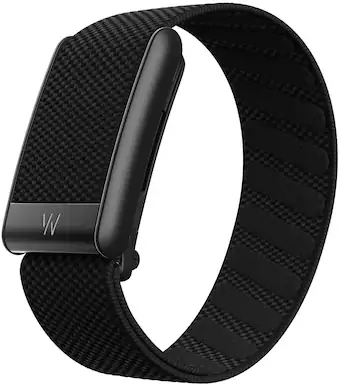
- WHOOP 5.0: As WHOOP’s most advanced model to date, this wearable provides a range of impressive metrics to inform your longevity training approach. It features WHOOP Age, a metric that takes recovery, sleep, and strain data to determine your physiological age and pace of aging (how quickly your body is aging relative to your chronological age).

- Bala Bangles: These streamlined wrist or ankle weights are an easy way to add a little extra resistance to your strength training workouts, without unnecessary impact or bulky gear. They’re available in 1, 2, and 3-pound options, and they’re ideal for use during low-impact workouts like walking, Pilates, yoga, and barre.
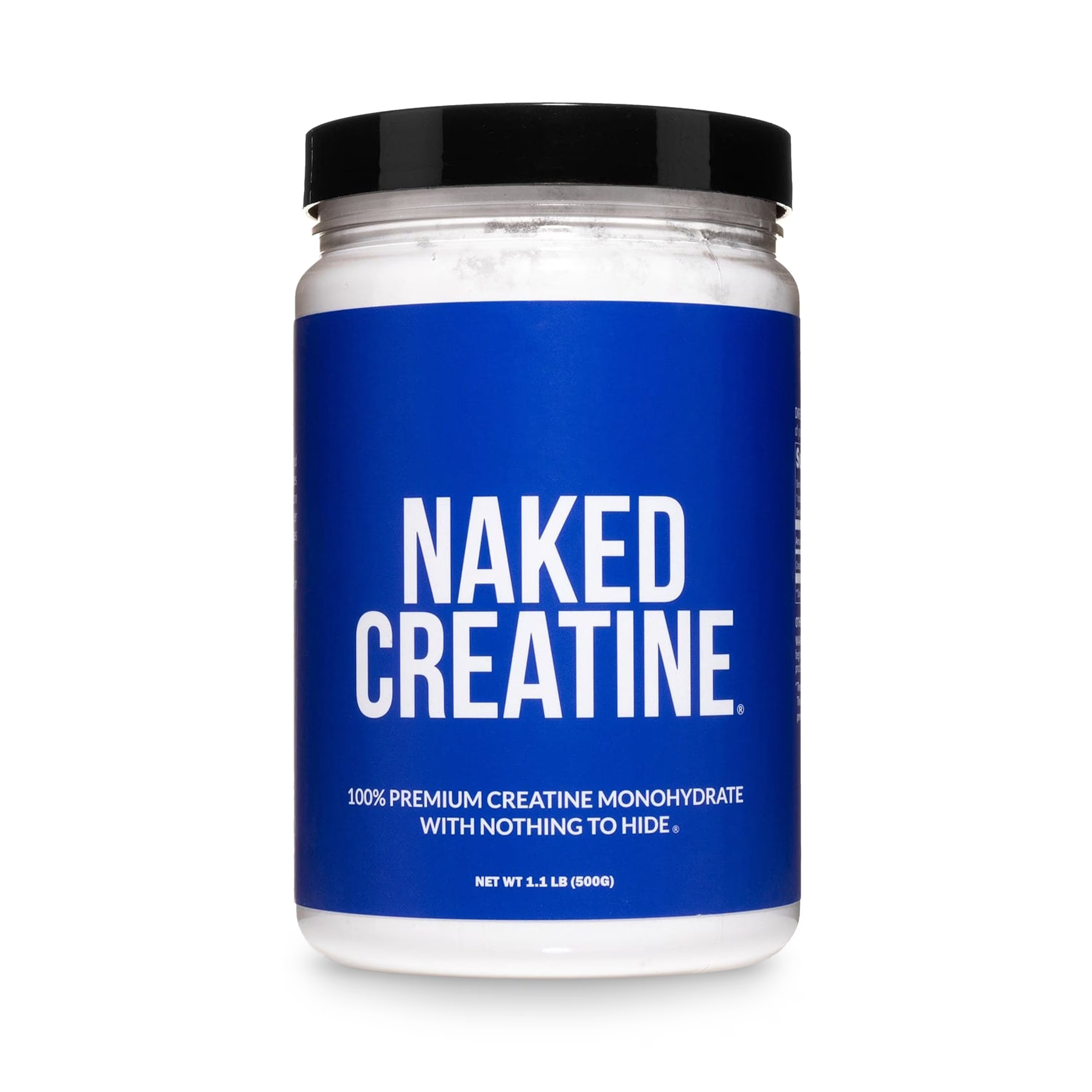
- Naked Creatine Monohydrate Powder 1KG: Containing a single ingredient, pure creatine monohydrate, this powder is a great option for anyone looking to add creatine to their supplement routine. Creatine can support healthy aging by helping your body replenish its ATP stores, which can promote lean muscle mass, strength, and overall performance. For a deep dive into creatine, check out this blog article.
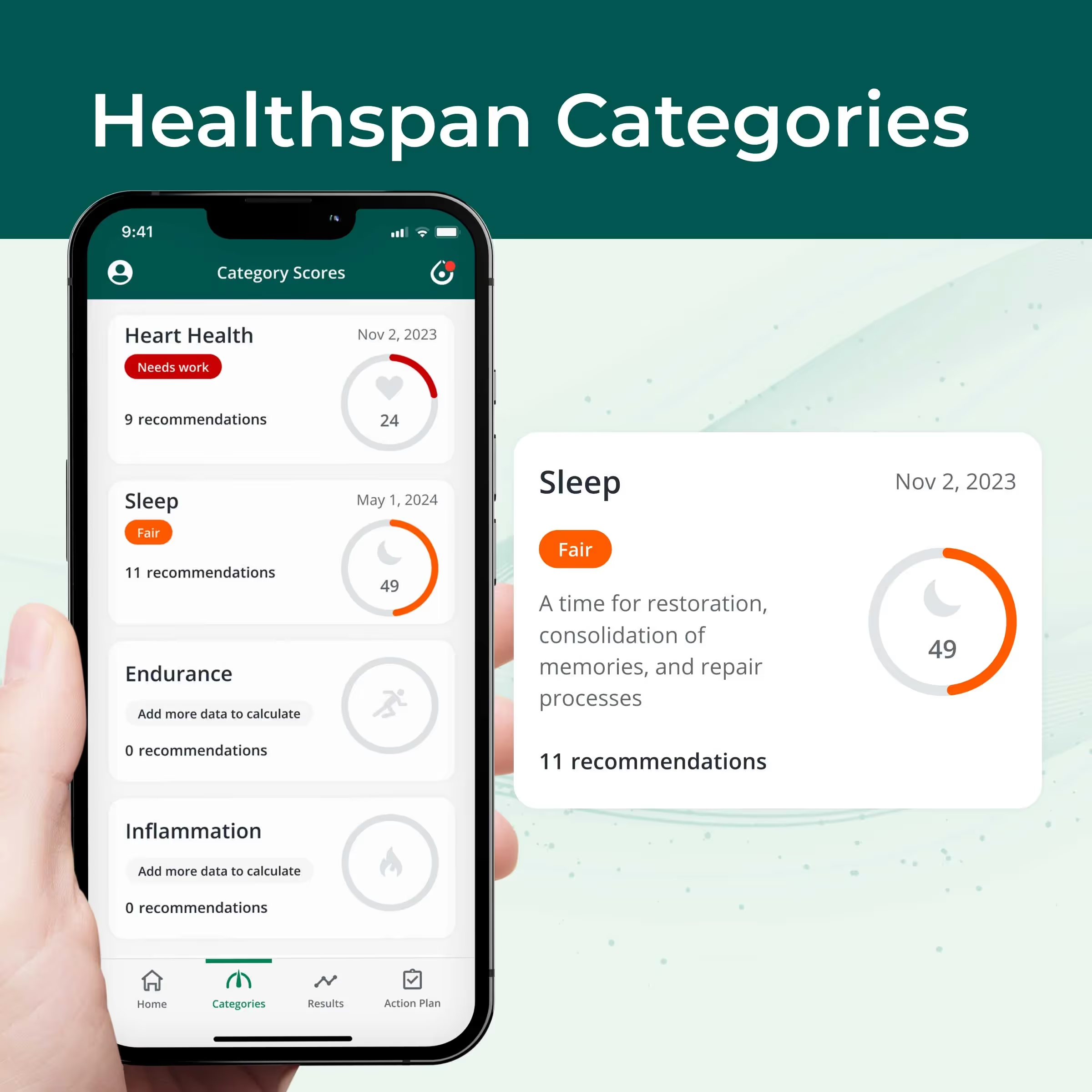
- InsideTracker Membership: The more information we have about our health, the better (especially as we age). An InsideTracker Membership will grant you yearly access to the health optimization platform, which takes blood test results (from a lab or your doctor) and provides a deep-dive analysis with personalized recommendations. If you’re looking to seriously prioritize longevity, it’s an excellent tool to use alongside your workout routine.