
Your Complete Guide to Rebounding, Featuring Fitness Pros
Low-impact, high-energy, and surprisingly powerful — this mini-trampoline workout blends cardio, strength, and serious mood-boosting benefits. Fitness pros break down what it does for your body (and who should try it).
We can all remember the pure, unbridled joy of jumping on a trampoline in the backyard, before things like bills and taxes and occasional back pain weighed us down. Rebounding, a cardio workout that involves jumping on a mini trampoline, can capture some of that childlike glee and give you some compelling health benefits, with no backyard required.
As a low-impact cardio workout you can do indoors, rebounding has some serious potential for the home exercisers, running haters, and easily bored among us. To get the complete picture on this trending workout, we chatted with a physical therapist and a celebrity fitness trainer about its benefits, drawbacks, and general tips to consider.
The Experts
- Lauren Kleban, celebrity trainer and founder of LEKFIT
- Ashley Katzenback, PT, DPT, CMTPT at Cape Concierge Physical Therapy
What is Rebounding, Anyway?
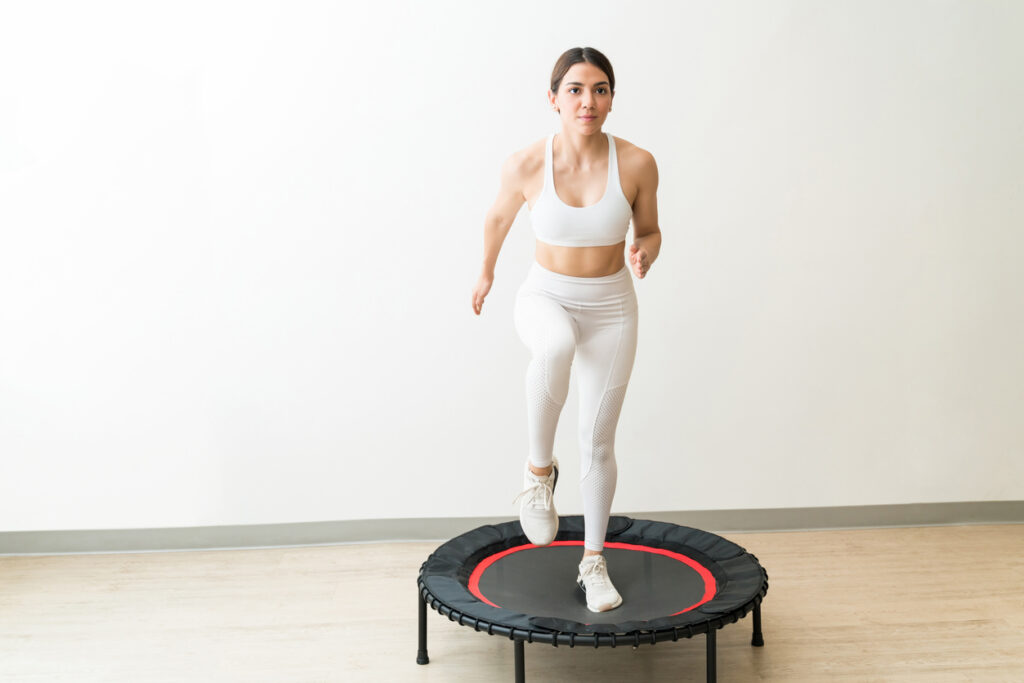
At its most literal, rebounding is just jumping on a trampoline. But these days, it’s the term used to describe working out by performing specific jumps and movements on a mini-trampoline. You can find in-person rebounding classes at fitness studios, as well as guided online routines if you invest in your own at-home rebounder.
The Benefits of Rebounding
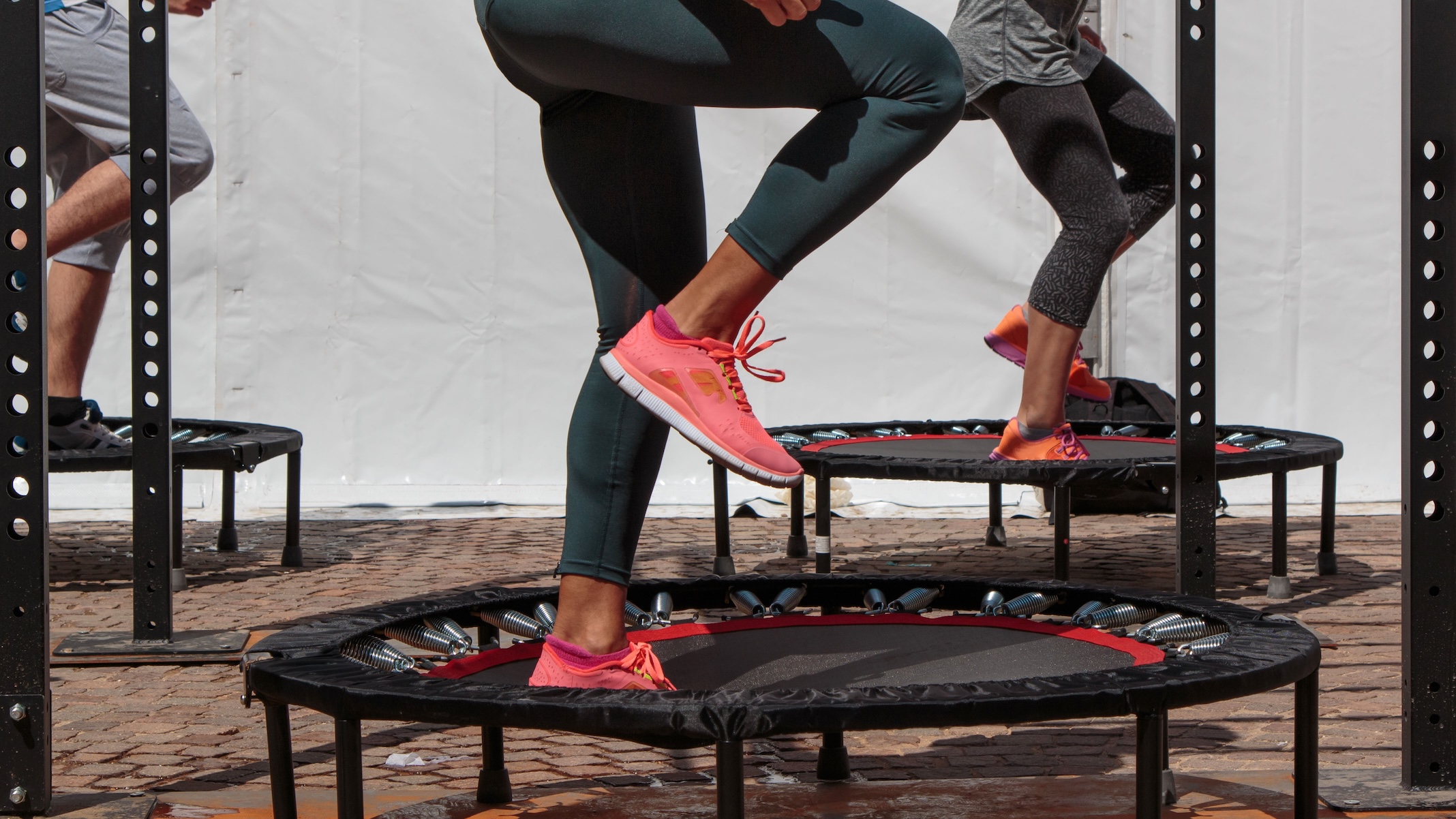
While rebounding is one of today’s fitness trends, its benefits as a low-impact cardio workout have long been recognized: A NASA study from 1980 found that 10 minutes of rebounding is up to 68% more effective than 30 minutes of jogging, with less joint strain. A 2024 Cureus study found that rebounding and mini-trampoline exercises boost blood circulation, oxygen delivery, and bone health.
Our experts expanded on these benefits (and more) below.
Low-Impact Cardio
“[Rebounding] not only gets your heart rate up like other forms of cardio, but is also great for strengthening, as you activate almost every single muscle in the body to jump and land,” says Kleban. “I love it compared to running or exercise on hard surfaces because it’s also gentle on your joints, supports your pelvic floor, activates and drains your lymphatic system, which boosts immunity.”
Lymphatic Drainage and Immunity
Lymphatic drainage is a huge wellness buzzword for everything from healthy skin to natural detoxification to immunity. Rebounding supports it through something called gravitational force, or G-force.
“Lymphatic activation and drainage happen on the rebounder because of something called G-force—the acceleration and deceleration that happens as you jump up and down. That change in gravity opens the valves of the lymphatic system, allowing it to activate and drain,” says Kleban.
To reap this benefit, don’t focus on jumping upward: “The key is that you’re not meant to jump high. You jump low and stay low to the bed of the rebounder, which creates that constant gravitational shift without impact. This movement helps flush out toxins and excess fluids and boosts immune function, so you not only feel great, but your skin looks amazing,” says Kleban.
A cardio workout and gorgeous skin to boot? We’re in!
Stridekick Tip
Alongside your rebounding routine, support your skin’s radiance with these skincare picks from our Shop:

- Ourself Skincare, a clinical-grade collection of topical skincare products that combine science and self-care for results that look as good as they feel
- The NovaaLab Glow Therapy Mask, a hands-free LED face mask that delivers multiple science-backed light wavelengths, including red light, to stimulate skin regeneration and repair. Wear it while you answer emails, read a book, or binge-watch TV as part of your self-care routine.
- Glo Skin Beauty, a line of science-backed skincare and skin health-centric mineral makeup formulated to fit into your daily routine
Stress Relief
All forms of exercise help with stress management, but cardio tends to offer a more dramatic endorphin boost for “feel-good” benefits. And with choreographed, high-energy routines set to upbeat music, rebounding is a serious spirit-raiser: “You can’t be in a bad mood jumping on a trampoline,” says Kleban. “It's truly functional as you improve your balance and your stress levels.”
Bone Density
Bone density is a significant health concern in later adulthood, especially for women after menopause. Osteoporosis impacts an estimated one in five women over 50, and approximately one in two women over 50 will break a bone due to osteoporosis. Workouts like rebounding can help by supporting bone strength, no matter which stage of life you’re in.
“For the purposes of building bone density, [rebounding] is especially helpful as it’s a great starting point for individuals who can’t yet tolerate impact but need to be
‘pounding their bones,’” says Dr. Katzenback.
“If you’re healing from a fracture, rebounding is a great way to rebuild bone strength. Or if you’re frail due to osteoporosis and have a high risk of fracture, rebounding is a safe way to start to impact your bones,” she adds.
And even if you don’t have a rebounder, don’t worry: Dr. Katzenback notes that you can start building bone mass and strength with just 10 to 20 daily jumps on the ground.
How Long to Rebound
The NASA study we mentioned above found that just 10 minutes of rebounding was as beneficial as a 30-minute jog. So even if you only have a few minutes between Zoom meetings or soccer practice drop-offs, you can squeeze in a quick rebounding sesh to reap the benefits listed above.

But if you’re down for a longer workout, rebounding is still a great way to go: “We love a 50-minute cardio/strength interval session with 20 minutes of that time dedicated to rebounding. I recommend a rebounding session last 20 to 40 minutes,” says Kleban.
Is Rebounding Safe During Pregnancy?
During pregnancy, jumping on a trampoline might (understandably) give you pause. But, speaking from experience, Kleban says rebounding is absolutely safe for most people during pregnancy, so long as you use the proper techniques.
“I rebounded through all of my pregnancies, from the moment I knew I was pregnant until I was literally on my way to the hospital. There is a short recovery period postpartum, where I recommend avoiding rebounding until medically cleared to make sure there’s no risk of prolapse before returning,” says Kleban.
Rebounding Tips for Beginners
Before hitting the rebounder, consider these bonus tips from our pros:
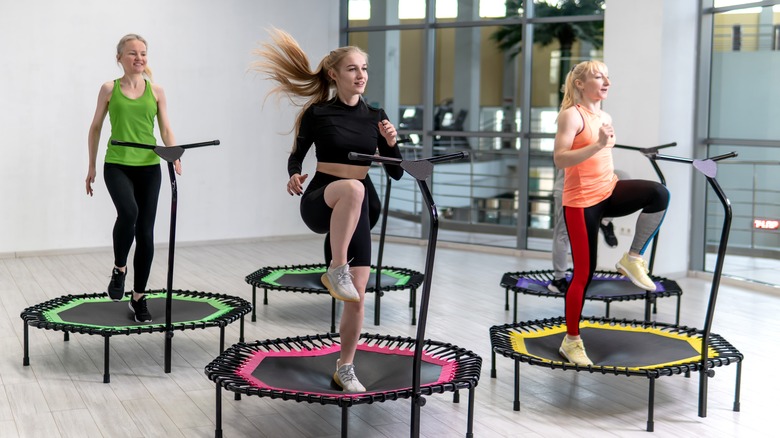
- Focus on small, controlled movements: “Jump low, stay grounded, and work against resistance rather than launching upward like a trampoline. The bounce is completely different, and that difference is what makes rebounding so effective and so gentle on the joints compared to traditional cardio,” says Kleban.
- Know the proper stance: “We always advise to work center, bounce low, keep hips square with knees always over toes. When getting off, always step down to the side,” says Kleban.
- If you have underlying conditions or injuries, talk to a PT. “Avoid using the rebounder if you have had recent abdominal surgery, such as hernia repair or C-section. Pelvic organ prolapse, vertigo, and/or unstable joints would also be contraindicated for rebounding,” says Dr. Katzenback.
And if rebounding isn’t quite speaking to you, check out these cardio alternatives, featuring top picks from the Stridekick Shop:
- The Row-s, a rowing machine with smooth, quiet magnetic resistance for a disturbance-free, full-body cardio workout
- The Summit Stairmill, a compact stair stepper with a 38-degree incline and adjustable speed settings to challenge your stamina
- The Stride-8s, Echelon’s leading treadmill model with a 22-inch HD touchscreen, 12% incline, and speeds up to 12 mph