

Creatine Gummies vs. Powders: Which is Better for You?
Creatine gummies are convenient, but do they actually work as well as powder? We asked a nutrition expert to break down the differences in effectiveness, cost, and ingredients.
Creatine is the clear star of today’s fitness scene, with few other supplements generating as much buzz. And as with anything that rises to trend status, we’re seeing more and more creatine products pop up across the market, each trying to offer something special for gym-goers and longevity seekers. While powder is the standard creatine format, gummies are trying to make their own way as a more convenient (and delightfully chewy) option for daily use.
Here’s the reality: a gummy won’t necessarily offer the same benefit as a powder, even with the same active ingredient. We chatted with a registered dietitian to break down the differences between creatine gummies and powders, helping us make prudent choices for our next supplement haul.
The Expert
- Megan Lyons, Doctor of Clinical Nutrition and founder of The Lyons' Share Wellness
What Are The Benefits of Creatine?
First, a creatine primer: it’s a compound your body naturally makes from 3 amino acids to support ATP (energy) regeneration during intense exercise. As for the potential benefits it can provide for the average exerciser, Dr. Lyons says:
- Improved muscle growth for those doing strength or resistance training
- Improved muscle recovery (potentially less soreness after exercising)
- Improved bone density
- Higher energy levels
- Better workout performance, especially for workouts involving HIIT, sprinting, or even endurance exercise
Some research also shows that creatine could support your mental performance (particularly memory and focus) when you’re stressed out, lacking sleep, or experiencing normal age-related cognitive changes.
Creatine Gummies vs. Powders: Which One Works Better?
Let’s look beyond the obvious taste/texture differences between creatine powders and gummies to what actually matters: do they work equally well?
While the answer will vary from supplement to supplement, Dr. Lyons backs creatine powders for their long(er)standing research.
“Creatine monohydrate [in] powder form has been the most studied. I trust it the most, and the research could definitely support that it is effective,” says Dr. Lyons.
As far as creatine gummies go, there are still a few questions to be answered: “Patent testing companies [have] tested gummies and found really variable quantities of creatine actually in the gummy. Sometimes it’s much less than what they’re reporting on the label,” says Dr. Lyons. One recent example came from NOW Foods: a test of 12 brands of creatine gummies conducted as part of the company’s testing program found that 6 failed to meet label claims.
“It’s important to get a therapeutic dose of 5 grams a day or more, depending on the person. If you’re trying to get that from a gummy and you don't know the concentration or if it actually includes what's being reported, you may end up consum[ing] a lot of extra sugar (or artificial sweeteners, or fillers, or colorings, etc.). And while those might not impact the efficacy of the creatine itself, an excessive amount of that is generally not good for our health,” says Dr. Lyons.
That’s not-so-great news for gummy lovers. If you’re set on creatine gummies, we’d strongly encourage taking a close look at the label for unwanted or questionable ingredients, and look for a third-party tested formula from a reputable brand.
How Do Creatine Gummies and Powders Compare on Cost?
Aside from effectiveness, value for money is a major deciding factor in our supplement shopping. Since taking creatine daily is crucial to reaping its benefits, it’ll be an ongoing expense. So are gummies and powders comparable in price? Not exactly.
“Gummies that I've seen all tend to be way more expensive per dose of creatine; I've seen some comparisons that it might be up to 5 times as much per gram of creatine,” says Dr. Lyons.
Of course, this price disparity will depend on the specific supplement you’re looking at. But for the most reliable balance of value and effectiveness, powder is a clear winner.
“Creatine monohydrate should be the only ingredient in the powder that I recommend, and it's actually pretty inexpensive in powder form. And it's flavorless, so even for people who don't like flavoured powders, it's really not that bad,” adds Dr. Lyons.
Creatine Tips From Our Pro
Now that we’ve compared creatine powders and gummies, let’s get a few last expert tips to guide your supplement strategy.
“As long as you don't have any pre-existing kidney conditions, I would absolutely recommend creatine, [and] I would recommend it in powder form,” says Dr. Lyons.
“Start with 5 milligrams of creatine monohydrate unless [you’re] very sensitive to bloating and water retention. In that case, start lower, with even as small as a quarter of a scoop, and increase gradually over a few days to get to that 5 grams per serving.”
“There's some more emerging research showing that 10 grams or potentially even more might be more effective for brain health, but at least at this time, based on the research, I would feel confident recommending 5 grams for the average person,” adds Dr. Lyons.
Stridekick Picks: Creatine Powders to Simplify Your Routine
Don’t feel like sifting through supplement options on your own? This is for you! We gathered up some pure creatine monohydrate powders from the Stridekick Shop (and they’re even HSA/FSA-eligible!).
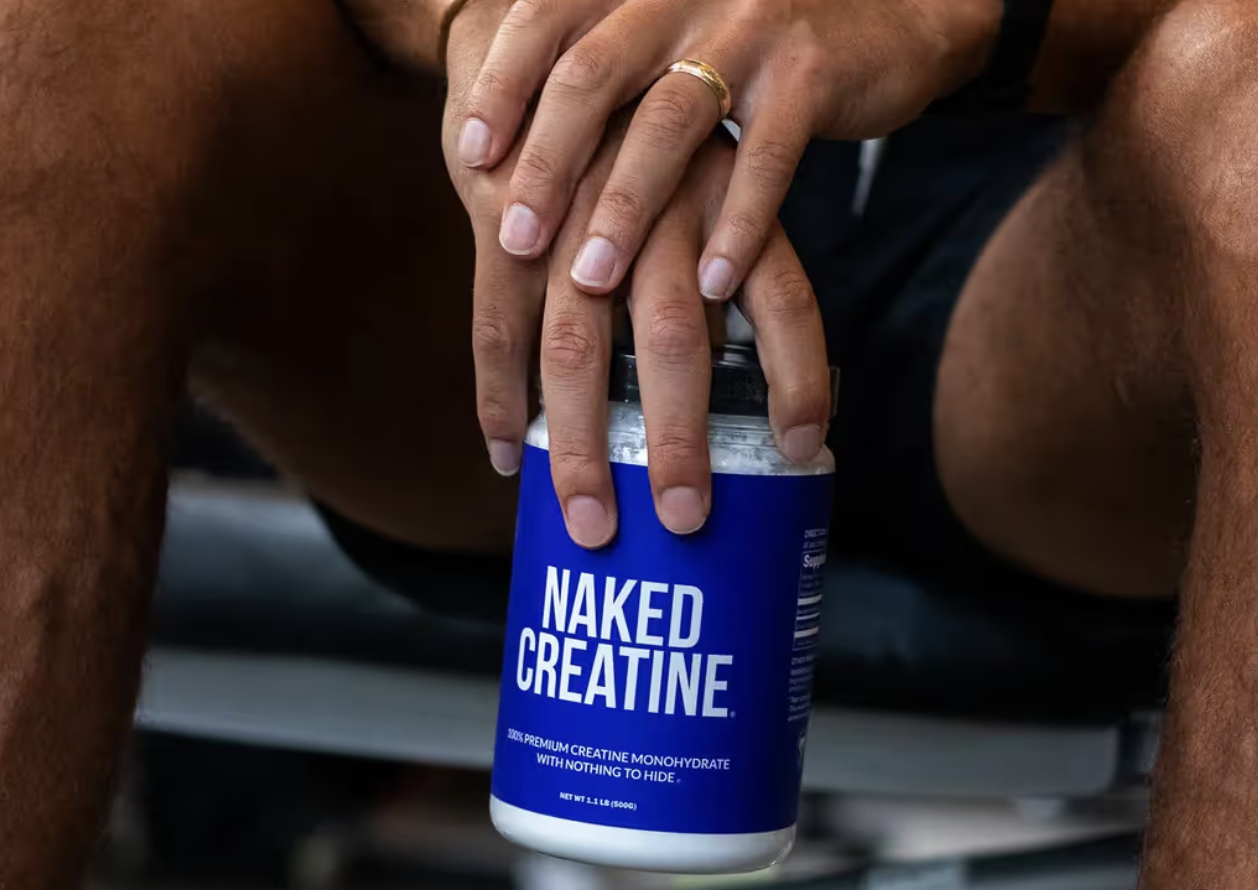
- Naked Creatine is pure creatine monohydrate, with no fillers, flavoring, or dubious additions. It comes in a 1kg tub, which provides 200 5-gram servings—in other words, it’ll be awhile before you have to repurchase. That’s music to our convenience-seeking ears!
- Gainful’s Creatine Monohydrate is another pure creatine monohydrate formula. It’s unflavored and dissolves easily into smoothies, shakes, and even water if you’re looking to keep it simple.
- Momentous’ Creatine Monohydrate contains the brand’s “Signature Spec” creatine monohydrate, which is manufactured in a pharmaceutical facility and third-party tested for contaminants, heavy metals, and purity.
These are just 3 of the many supplement options available in the Stridekick Shop. Take a look for yourself!