
Is the Hooga Red Light Therapy Torch Worth It for Targeted Pain Relief?
A look at the handheld, precision-tip device built for the spots a red light panel can't reach — and who it's actually good for.
This post contains affiliate links. Stridekick may earn a commission on purchases.
Most red light therapy means standing in front of a panel for ten or twenty minutes, lighting up your whole chest or back whether you need it there or not. That works fine for broad coverage, but it's overkill for a single nagging spot — a knuckle, the inside of a sinus, an old scar, a nerve that only bothers you in one exact place.
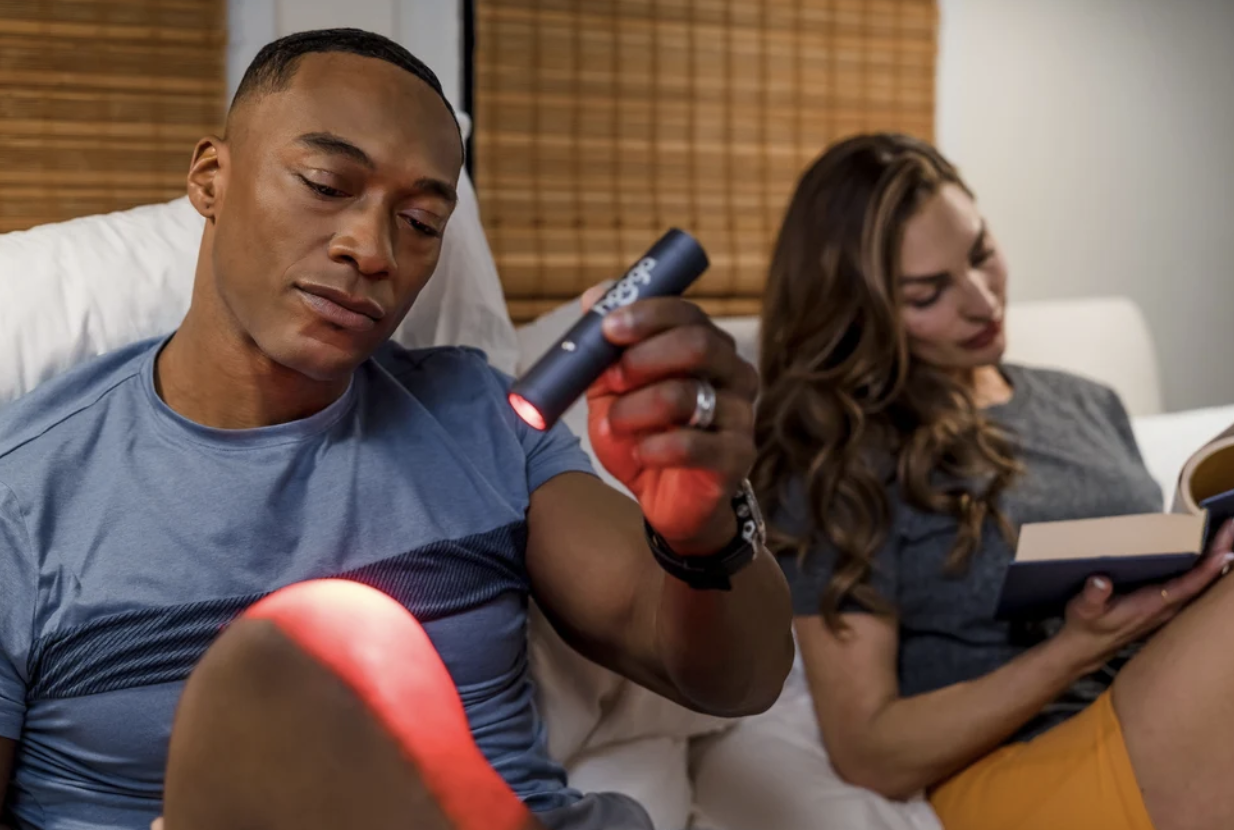
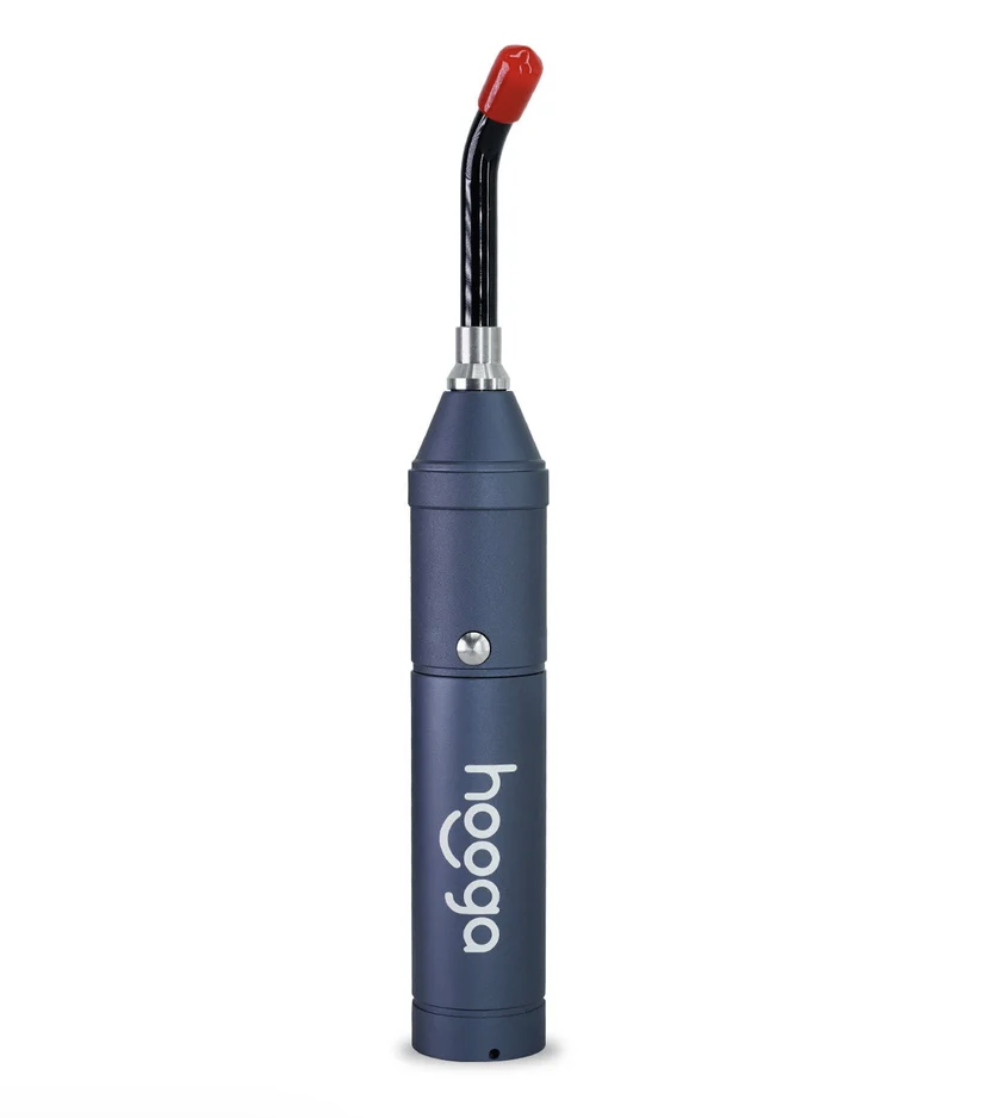
The Hooga Red Light Therapy Torch is built for that narrower job. It's a handheld, battery-powered device with an interchangeable precision tip that narrows red, near-infrared, and blue light down to a small, focused beam, instead of flooding a whole region.
What the Hooga Red Light Therapy Torch Does

Here's what's actually packed into it, and why each part matters:
- Five wavelengths across red, near-infrared, and blue light (415/460nm blue, 630/660nm red, 850/940nm near-infrared). Red and near-infrared are the two most commonly used for pain and recovery — red working more at the surface, near-infrared reaching deeper into tissue. Blue light is typically used for skin concerns like acne, so you're getting a tool that covers more than one use case without switching devices.
- An interchangeable precision tip. This is what separates the Torch from a standard handheld panel — it narrows the beam so you can actually aim it at something small: a knuckle, a nostril, a scar, a single trigger point, rather than lighting up everything around it too.
- 120mW/cm² irradiance from 5W of actual output. That's a meaningful amount of power for something this size, which matters because low-powered handheld devices often need much longer sessions to deliver a comparable dose.
- Pulse mode at 10Hz, alongside steady light. Some users prefer a pulsing delivery over constant light; having both built in means you're not locked into one or the other.
- A built-in 3-minute timer. Short enough that a session fits into a few minutes before bed or between meetings, and it shuts off on its own so you're not guessing at timing.
- Rechargeable battery and compact size (8 inches by 1.25 inches, 5 ounces). No cord, no panel-sized footprint — this goes in a bag or a desk drawer, not on a wall.
- Protective eye glasses, a carrying case, and a cleaning coth included. Eye protection isn't optional with a device this bright at close range, so it's worth it that Hooga includes it rather than leaving you to buy it separately.
👉 See the Hooga Red Light Therapy Torch
Why a Precision-Tip Handheld Works Differently Than a Panel
A full-size red light panel is the right tool when you want broad coverage for your whole back, both legs, or a wide stretch of skin. But a panel can't follow you into a nostril, can't isolate a single knuckle without lighting up your whole hand, and isn't something you're taking on a trip.
The Torch's whole premise is the opposite trade: less coverage, more precision. The interchangeable tip is what makes that real rather than theoretical. Independent reviewer Marco Gentile, who tested the device for hard-to-reach spots like inside the nose and ear canal and on old piercing scars, called the precision tip the standout feature, saying it "opens up entirely new treatment possibilities" that a standard flat-panel handheld doesn't offer.
To be clear, this isn't a claim that targeted light works better than broad-panel light for the same condition; it's a different tool for a different job. If what you need is coverage across a large area, a panel will get you there faster. If what you need is one specific spot treated precisely, that's what this device is built around.
Where the Hooga Torch Could Fit Into Your Recovery Routine

A few real situations this gets reached for, based on the device's design and the reviews behind it:
- A specific nerve or joint pain point. One verified buyer described the Torch providing "life-changing" relief for nerve pain following a dental injury. This is a good example of the kind of narrow, specific pain point this device is built to target, rather than a broad ache across a whole limb.
- Hard-to-reach spots like the inside of the nose, ear canals, or small scars are the exact use cases Marco Gentile tested it for professionally.
- A single stubborn joint like a knuckle, wrist, elbow, or knee, where a panel's width is more than you need.
- Travel. Its small size and rechargeable battery make it realistic to pack, unlike a panel.
- Spot treatment for blemishes or cold sores, using the blue or red light modes, alongside your main recovery routine.
- Supplementing a full-size panel you already own. One reviewer described pairing the Torch with their Hooga Pro 300 panel specifically for the blue light mode and the portability it adds.
One practical note: because the precision tip narrows the beam, it's genuinely a one-spot-at-a-time tool, if you're trying to treat multiple larger areas in one session, this will take longer than a panel would.
What Does the Research Say About Red and Near-Infrared Light Therapy?
Red and near-infrared light therapy has a reasonably solid research base behind it for pain and recovery, even if most of that research hasn't tested this specific device.
A 2026 systematic review pulled together 53 studies on red and near-infrared light for joint pain, tendon injuries, low back pain, and recovery after surgery, and found real, repeatable improvement in both pain and movement compared with sham treatment. Used around workouts, it also cut next-day muscle soreness by about 30%.
Cleveland Clinic describes LED light therapy generally as a "safe, relatively risk-free treatment" for most people, with red light potentially helping reduce inflammation and support wound healing, and blue light showing some benefit for mild to moderate acne specifically — though it notes at-home devices tend to produce more modest results than in-office treatments, and long-term safety data is still limited.
Worth knowing: this research looked at red and near-infrared light therapy broadly, not this specific handheld device or its precision tip. The research supports what's inside the Torch; it doesn't prove this particular product performs better than any other red light device delivering a comparable dose.
Is Hooga a Reputable Brand?
Hooga Health holds a 4.5-out-of-5 rating across 75 Trustpilot reviews at the brand level— those reviews span Hooga's panels, masks, and other devices rather than the Torch specifically, since it doesn't yet have its own public reviews there.
On the Torch itself, early buyer reviews run positive: one reviewer called it "simple to use" and "strong," and said it's become part of his daily self-care routine.
A Few Things to Know Before You Buy
- There's no manual intensity control. You can't dial the output up or down — Gentile's workaround is simply holding it farther from the skin to reduce intensity, which works but isn't as precise as a built-in control.
- The 3-minute timer means more sessions for larger areas. Great for one spot, slower if you're trying to cover more ground.
- Long-term safety data on LED light therapy is still limited, per Cleveland Clinic, even though short-term use is considered low-risk.
- Check with a doctor first if you're on a photosensitizing medication (isotretinoin and lithium are specifically called out), have a history of skin cancer, or have an inherited eye disease. Always wear the included eye protection during use.
Who Will Get the Most Out of the Hooga Red Light Therapy Torch
This is a good fit if you're dealing with pain or irritation in one specific, well-defined spot like a joint, a nerve pain point, a hard-to-reach area, or a recurring skin issue like a cold sore, and want something precise and portable rather than a panel you stand in front of. It's also a natural add-on if you already own a panel and want a travel-friendly option or the blue light mode for skin use.
It's a lesser fit if you're trying to treat a large area in one session, like a full back or both legs, where a panel's broader coverage will get you there faster.
Is the Hooga Red Light Therapy Torch Worth It?
You're getting a surprising amount packed into something that fits in one hand: real output at 120mW/cm², five wavelengths instead of the usual one or two, and a full kit that most handheld devices make you buy separately. If you've got a spot that's been nagging at you and a panel has always felt like overkill for it, this is a genuinely appealing way to finally treat it directly.
Bonus: it's HSA/FSA eligible. If you're enrolled in one of these accounts, you may be able to put pre-tax dollars toward it, which makes it an easy, low-friction way to add a targeted recovery tool to your routine.