
.jpg)
Is the Almost Heaven Hillsboro Sauna Worth It? What the Research Actually Says
Is the Almost Heaven Hillsboro home sauna worth it? Here's what a 21-year Finnish study found about sauna use and heart health.
This post contains affiliate links. Stridekick may earn a commission on purchases.
Sauna bathing has one of the longer track records of any wellness trend, and unlike a lot of recovery gear, it's backed by a real, multi-decade human study.
The direct answer: regular sauna use is genuinely linked to better cardiovascular health and longevity in that research; the effect gets stronger the more consistently you go, and the Almost Heaven Hillsboro is a well-built way to get authentic sauna heat at home if you have the space and electrical setup for it.
Here's what the research actually found, how often you'd need to use it to see that benefit, and what real owners of this specific sauna say.
What Does the Almost Heaven Hillsboro Sauna Do?
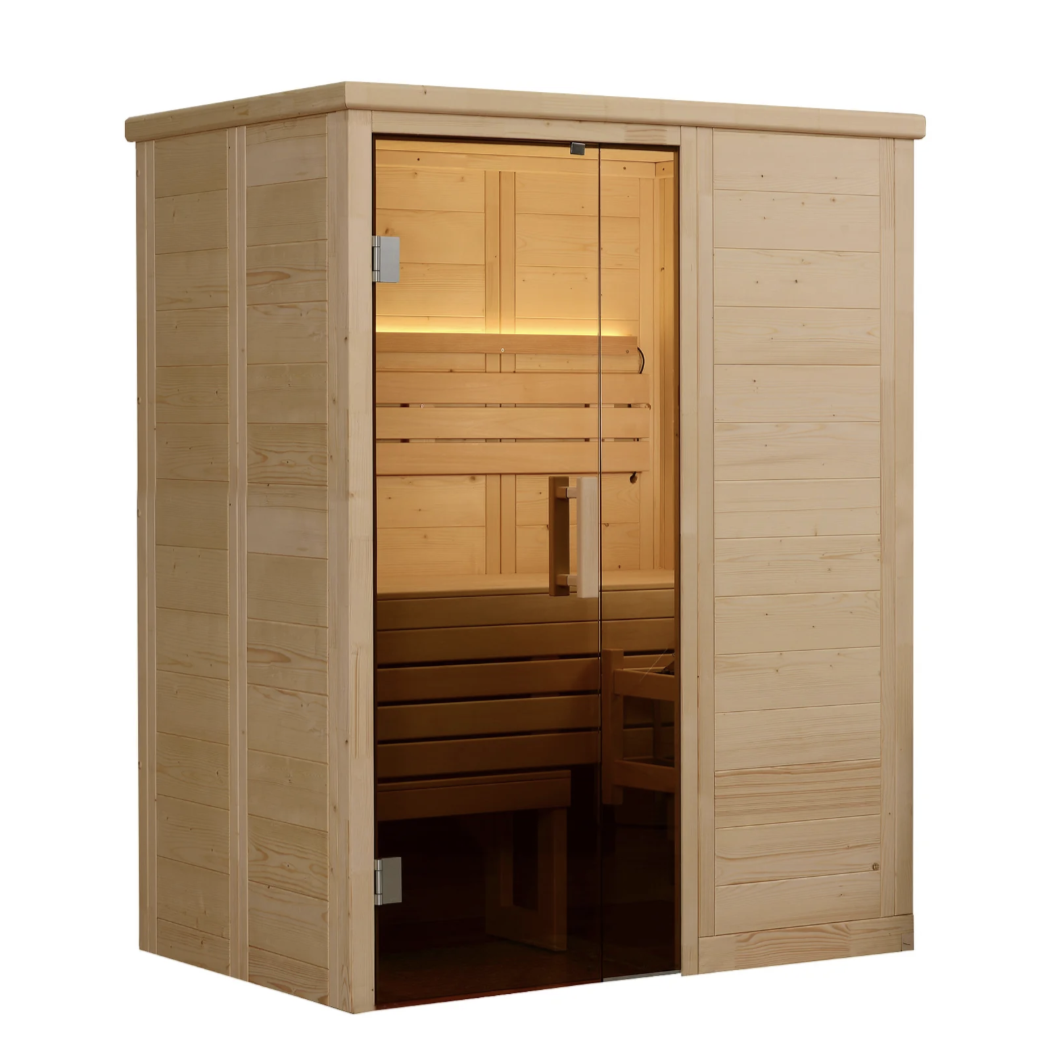
The Almost Heaven Hillsboro is a 2-person traditional dry sauna built from tongue-and-groove Nordic spruce, heated by a Harvia 6kW electric heater that reaches up to 185°F. It's designed for indoor installation in a spare room, basement, or bathroom. It also comes with a tempered glass door and stainless steel hardware.
Heat-up time from a verified buyer review: about 20 minutes to full temperature — faster than the 30-to-45-minute range typical for electric home saunas, thanks to a properly sized heater, according to Sauna Place.
That 6kW heater is a solid size for a 2-person unit. Home 240V sauna heaters typically run 4.5 to 9kW, and bigger heaters heat faster and hold temperature more steadily, per Sun Home Saunas.
The tradeoff is the dedicated 240V, 30-amp circuit the heater requires, and most homes don't have one sitting unused, so a licensed electrician is part of the real cost of ownership. That's standard for traditional saunas this size, and it's also why they can hit 180–195°F instead of the 130–165°F ceiling on smaller, 120V plug-in units.
Does Sauna Use Actually Improve Your Health? What the Research Found
The most-cited sauna research comes from the Kuopio Ischaemic Heart Disease Study in Finland, which followed 2,315 middle-aged men for a median of nearly 21 years. Compared to using a sauna once a week, the men who used one 4 to 7 times a week had a 63% lower risk of sudden cardiac death, 50% lower risk of fatal cardiovascular disease, and 40% lower risk of dying from any cause during the study.
Longer sessions mattered too: over 19 minutes per session was linked to about half the risk of sudden cardiac death compared to under 11 minutes.
That first study only looked at men, but a follow-up study of 1,688 people, with just over half of them being women, found the same pattern held for both sexes: frequent sauna use was linked to meaningfully lower cardiovascular death risk.
How Often Should You Use a Sauna?
The research points to a fairly clear pattern: more sessions per week and longer sessions were both associated with bigger benefits, up to the 4-to-7-times-weekly, 19-plus-minute range studied. You don't need to hit that exact number to get some benefit; 2 to 3 sessions a week already showed real risk reduction over once a week, but it's a useful target if you're trying to get the most out of regular use.
Both studies were done in traditional Finnish dry saunas similar in style to the Almost Heaven Hillsboro (high heat, low humidity), so the setup matches what was actually studied, which isn't true of every sauna-adjacent product on the market.
Is Sauna Use Safe? What to Know Before You Start
Sauna use is generally safe for healthy adults, but per the Cleveland Clinic, skip it after a recent heart attack or stroke, or if you've been drinking. Check with a doctor first if you're pregnant, over 65 or under 16, have a heart or neurologic condition, or take regular medications.
Stay hydrated, keep sessions to roughly 15 to 20 minutes (5 minutes if you're new to it), and exit right away if you feel dizzy, weak, or short of breath.
Traditional vs. Infrared Sauna: Does the Research Apply to Both?
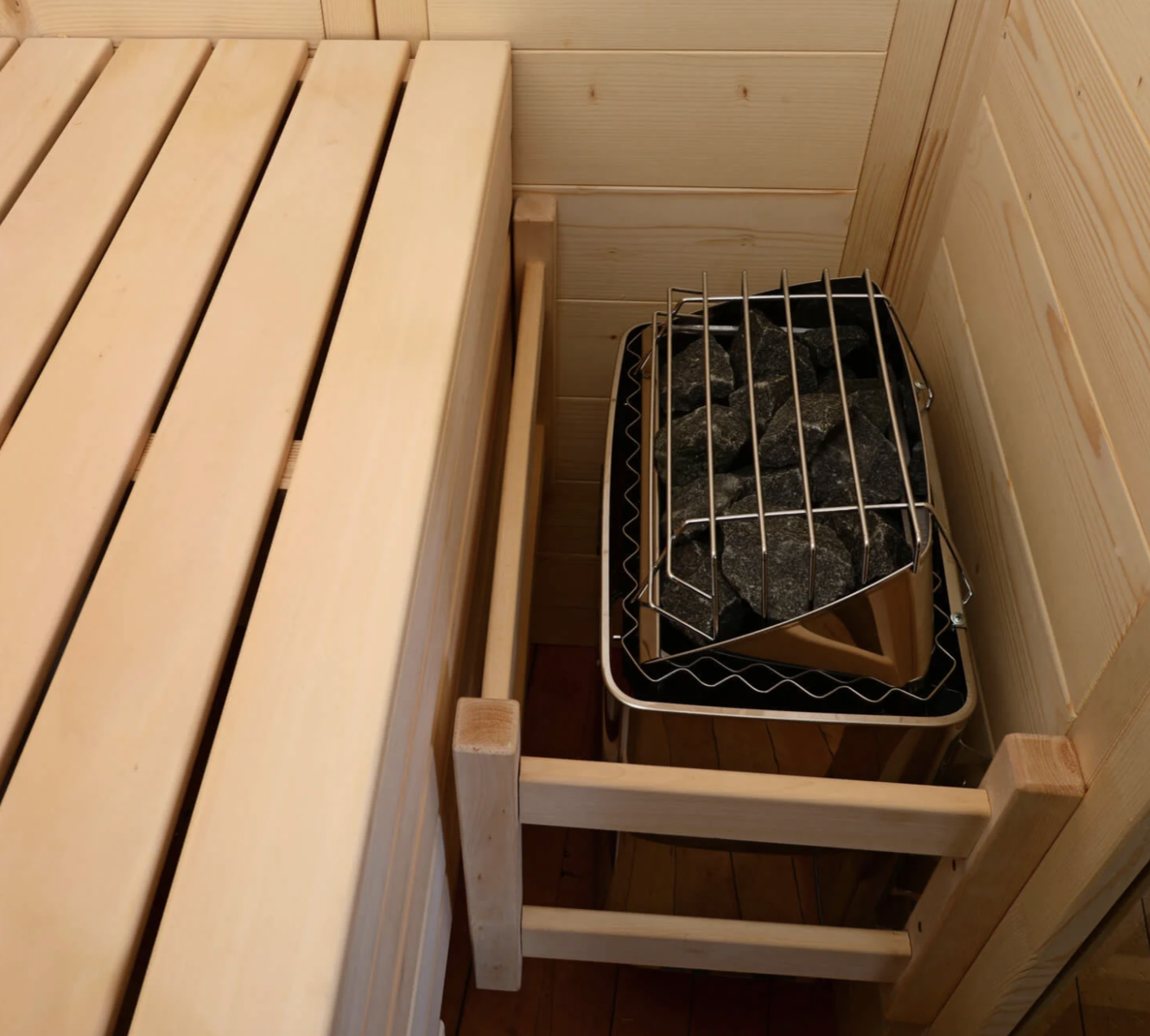
Not all home saunas are built the same way, and it affects which research applies. A traditional sauna like the Almost Heaven Hillsboro heats the air around you, typically 150–195°F, which is why it can hit up to 185°F.
An infrared sauna skips heating the air and instead uses infrared light to warm your body directly, running a much lower air temperature of about 110–135°F. That difference in mechanism is also why session lengths differ: traditional sauna sessions tend to be shorter because the air itself is so hot, while infrared sessions are often stretched longer at that gentler temperature.
Here's why that matters: the Kuopio Ischaemic Heart Disease Study and the BMC Medicine follow-up were both done in traditional Finnish saunas at that higher heat range, the same style as the Almost Heaven Hillsboro. Infrared saunas have their own, separate, and still-developing research base (the Cleveland Clinic points to some early evidence for heart health and muscle recovery), but it's not the same evidence, and the two shouldn't be treated as interchangeable. If the cardiovascular research above is the reason you're shopping, a traditional sauna is the style that research was actually done in.
The Investment

Buy the Almost Heaven Hillsboro if you want authentic, high-heat traditional sauna sessions at home and you're set up (or willing to get set up) for the 240V electrical requirement.
The case for it comes down to three things lining up. The cardiovascular research behind consistent sauna use is some of the strongest in the wellness-product space: a 21-year study of over 2,300 people, backed up by a second study that specifically included women. This sauna is built in the exact traditional, high-heat Finnish style that research was actually done in, not a different category like infrared.
Real owners consistently back up both the heat performance and the build quality once it's set up, with assembly being the one honest friction point.
If you're already sold on making sauna a regular habit, several times a week, not an occasional treat, owning one outright also means you're not paying for a gym or spa membership indefinitely just to access one.
Not ready for that level of commitment? The BioRemedy Plus Infrared Sauna Blanket is a much lower-commitment way to try a regular heat-therapy habit. There’s no need for an electrician, no dedicated room; it folds away, and it's HSA/FSA eligible too.
Worth knowing: it's infrared, not the traditional dry heat covered by the research above, so it's a different and still earlier-stage evidence base rather than a budget version of the same thing. But it's a reasonable, low-stakes way to find out whether you'll actually stick with a regular sauna habit before committing to a built-in unit and an electrician visit.
Either way, budget time for setup on the Hillsboro specifically — assembly plus the 240V electrical work isn't a same-afternoon project, and it's worth having that squared away before the sauna itself arrives.
What Is HSA/FSA, and How Does It Actually Save You Money?
An HSA or FSA lets you pay with pre-tax paycheck dollars, so a purchase like this can effectively cost 20–35% less depending on your tax bracket. It’s not a discount, just skipped taxes. HSAs need a high-deductible health plan and roll over year to year; FSAs are more widely available but usually come with a use-it-or-lose-it deadline. Both work as a card at checkout or as a reimbursement you file after; just check with your plan administrator!
The Stridekick Shop has a dedicated HSA/FSA-eligible collection if you want to see what else you can put those pre-tax dollars toward — recovery gear, sleep tech, supplements, and more.