
Do You Need a Biomarker Blood Test? What a Health Pro Thinks About This Wellness Trend
Are at-home blood tests worth it? A doctor breaks down the pros, the accuracy risks, and which biomarkers matter most.
This post contains affiliate links. Stridekick may earn a commission on purchases.
Maturing is realizing blood testing is actually essential for your long-term health, not just a needle-phobia-inducing reason to procrastinate your annual physical. It can catch signs of issues early, often before they cause symptoms, and helps your doctor make meaningful suggestions to protect your ongoing health.
While blood testing used to only be accessible through referrals and in-person appointments, we’re seeing more direct-to-consumer (DTC) tests hit the market. They put you in the driver’s seat, allowing you to order lab panels online without a prescription or doctor’s appointment. But are they any good? Can they bring real value to your health routine? We asked a medical pro to find out.
The Expert
- Dr. Maria Knobel, MBBS BSc (Hons) MRCGP, Medical Director at MedicalCert UK
First: The Blood Test Basics
To understand why you might be interested in a DTC blood test, let’s go over biomarker blood testing as a whole.
“Biomarkers are measurable signs in the body that show us how the body is doing or if a disease is present in an individual…It acts like a sort of dashboard for the body,” says Dr. Knobel.
“When doctors order lab tests, they’re looking at these biomarkers to help them see how a person’s particular organ or organ system is doing. In a routine blood test, for example, creatinine tells us how well the kidneys filter waste, HbA1c shows average blood sugar, and ferritin reflects how much iron the body has in storage. LDL cholesterol points to heart disease risk, and liver enzymes like ALT rise when liver cells get damaged. Together, these can indicate to a doctor that a patient likely has diabetes or kidney disease, even years before any symptoms appear.”
“Each test still only captures one moment, though. I always read results in [relation] to symptoms, family history, and lifestyle because numbers in a blood test can also mean different things depending on the person’s history,” adds Dr. Knobel.
DTC vs. Traditional Blood Testing: Key Differences
DTC and traditional blood testing are entirely different experiences, but there’s no clear-cut winner. Nuanced factors like price (which depends on your health insurance), accessibility (which depends on your location), and the degree of professional support (which depends on the test platform) should all factor into your decision.
Here are key differences to consider:
Medical Oversight
“The number one difference is that DTC tests lack professional medical oversight. With DTC testing, you don’t need a referral from a physician, and patients can do these tests at home,” says Dr. Knobel.
But that’s not always a bad thing: “One way I can find these useful is for those in low-income areas where even a single visit to the doctor can cost them a lot just to get referred to a lab, then come back again for interpretation. It saves them the cost of that first visit,” says Dr. Knobel.
“However, because the patient is acting on their own, the tests they think they need may not be accurate, and may cost more when they finally get their results interpreted by a physician. Interpreting the results is also harder, as they might only be looking at the results on their own and not taking into account other factors like age, disease history, or other stuff that a doctor would not miss. There’s also the added cost of paying them out of pocket, as these are not typically covered by insurance.”
Accuracy
Another significant concern is accuracy: “At-home DTC tests are also prone to producing erroneous data due to incorrect sample handling. It can be dangerous if patients use these results as absolute, thinking they’re healthy when in reality they should be consulting with a doctor already, all because of an incorrect reading,” says Dr. Knobel.
So if DTC tests make the most sense for you, try to get the blood tests done in a lab, not at home, for accuracy. Many of today’s DTC blood testing platforms offer the option to do so. You’ll most likely still avoid a visit to the doctor’s office, as one of the platform’s doctors can review and interpret your results remotely.
Personalization
DIY biomarker blood tests often provide a wider range of test options than you’d get at a standard physical. They usually also compile your data into an app, where you can access it anytime, along with personalized lifestyle recommendations.
This is by no means the same as talking to a doctor face-to-face, but for those who want more control over their healthcare, it’s a compelling option.
Ready to Test? Consider These Biomarkers.
Many DTC biomarker blood tests use an à la carte approach, letting you pick and choose which tests you get. This can help with cost-efficiency in some situations and grant access to tests that go beyond the average panel at an annual physical. But which ones should you look for to support general health and wellness?
“[To] prolong lifespan and overall quality of life, useful biomarkers would be those that identify hidden systemic stress, predict long-term chronic disease risk, and measure baseline metabolic efficiency. Some examples of these essential longevity markers include Apolipoprotein B (ApoB) and Lipoprotein(a) [Lp(a)] to track cardiovascular plaque risk, fasting insulin and HbA1c to catch early metabolic decline and blood sugar trends, high-sensitivity C-reactive protein (hs-CRP) to monitor silent systemic inflammation, and Cystatin C to accurately gauge kidney health and organ reserve,” says Dr. Knobel.
If you’re training for a marathon or primarily focused on physical fitness, you might be interested in a few other tests: “For pro athletes, they always want to be in tip-top shape. For that purpose, useful biomarkers would be Creatine Kinase (CK) to track acute muscle damage and strain, testosterone-to-cortisol ratio to evaluate systemic stress and catch overtraining early, and also ferritin and hemoglobin to measure iron stores and oxygen-carrying capacity for endurance,” Dr. Knobel adds.
Getting Accurate Blood Test Results
We’ve already touched on the fact that accuracy is a major concern in DTC blood testing. Inaccurate results aren’t just unhelpful; they can be harmful, as acting on them might not have the health effect you’re hoping for.
Unfortunately, many factors can skew a blood test result. “Heavy workouts so close to a blood test is an example, which can cause Creatine Kinase (CK) to spike up to 10 times normal levels, and falsely elevate liver enzymes like AST and ALT. As is drinking the night before, it can alter liver metabolism numbers even after 12 hours without food,” says Dr. Knobel.
This might lead you to wonder if timing matters, too. “We generally don’t require patients to get their blood drawn at specific times of the day, as these small changes in numbers are already circumvented with the modern technology we have today, and these numbers remain stable and interpretable accurately by physicians. However, some tests that do require strict timings still exist, like if you take medications like lithium, thyroid hormones, or blood thinners, doctors would prescribe the draw for an exact window (e.g., ‘12 hours after your last dose’ or ‘immediately before your morning pill’) to ensure they are measuring the drug at its lowest point,” Dr. Knobel notes.
Biomarker Blood Testing from the Stridekick Shop
If DTC biomarker blood testing sounds like the right choice for you, consider InsideTracker. It’s been around since 2009, so it’s not exactly new to the game, and its membership format makes it easy to truly incorporate your blood test results into your wellness routine.
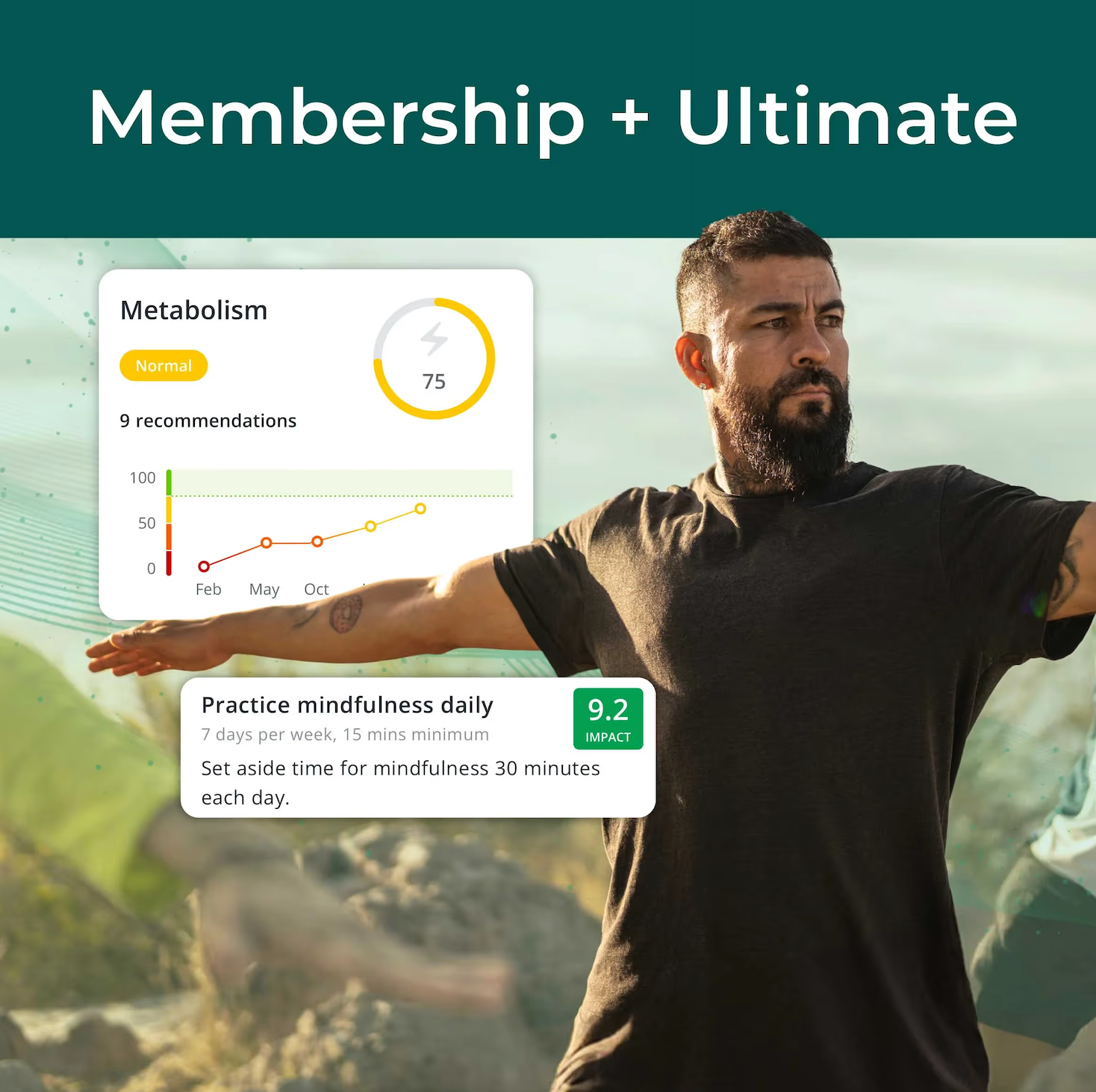
InsideTracker offers the option to get your blood drawn in a lab or at a mobile blood draw station, preventing skewed results from improper handling. Your results are loaded into the virtual platform and analyzed using AI, which creates a customized, science-backed action plan with diet, supplement, exercise, and habit suggestions. Depending on which membership you choose, you’ll re-test every 3 to 12 months for updated recommendations.
You can snag your (HSA/FSA-eligible!) InsideTracker Membership in the Stridekick Shop!
Shop the InsideTracker Membership | HSA/FSA-eligible
Shop the Membership + Ultimate test | HSA/FSA-eligible
Shop the Membership + 2 Ultimate tests | HSA/FSA-eligible
Shop the Membership + 4 Ultimate tests | HSA/FSA-eligible